The Quietest Tier: Auditing Name Resolution Before It Becomes a Control Failure
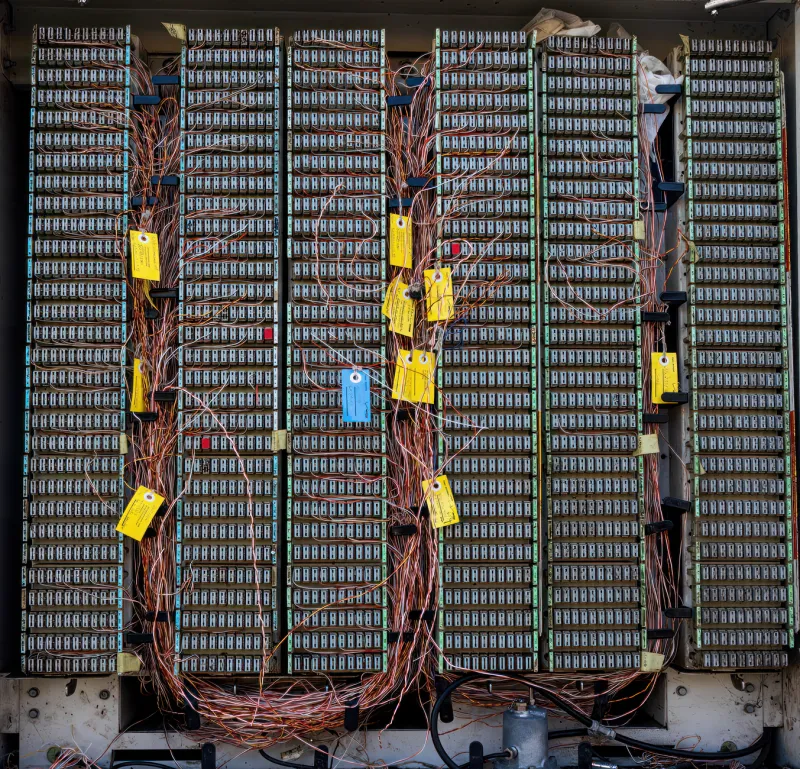
Photo: ProjectManhattan, CC BY-SA 3.0, via Wikimedia Commons
Zero-trust programmes tend to concentrate attention on the visible instruments of policy: identity providers, policy decision points, segmentation gateways and the dashboards that report on them. Beneath all of that sits a quieter tier. Before a session is authorised, a service is discovered, a certificate is validated or a log line is enriched, something must resolve a name. When that tier is treated as plumbing rather than trust infrastructure, the estate acquires a single point of failure that rarely announces itself until it is already shaping outcomes.
Resolution Is a Control-Plane Dependency
A resolver is not merely a directory lookup service. In a modern UK enterprise it sits beneath service discovery, mutual TLS validation, endpoint policy, mail routing, telemetry enrichment and much of the evidence that audit teams later rely upon. If resolution is degraded, the first symptom is often not an outage. It is a quiet shift in behaviour: applications fall back to cached answers, endpoints switch to secondary resolvers, and policy engines begin making decisions on names they can no longer verify with confidence.
The audit question is therefore not whether DNS works on an ordinary Tuesday. It is whether the naming layer is engineered, monitored and evidenced as a control. That distinction matters most in estates that have adopted zero-trust principles without revisiting the assumptions inherited from a flatter network design.
Five Questions for a Practical Audit
A useful audit of name resolution can be structured around five questions. Each should produce evidence rather than assurance by assertion.
First, how diverse is the resolver path? Diversity is not a count of servers. It is independence across failure domains: power, rack, network segment, operating system, upstream provider and administrative team. Many estates discover that three resolvers share a single hypervisor cluster, a single patch cycle and a single upstream forwarder. In the UK, where last-mile diversity and regional cloud availability are already board-level topics, it is worth asking whether the naming layer has received the same treatment.
Second, is DNSSEC validation actually enforced? Enabling validation on a resolver is not the same as proving that bogus responses are rejected. Audit evidence should include test queries against deliberately invalid signatures, confirmation that validation failures are logged with client identity, and a clear statement of what happens when validation cannot complete. Monitoring mode is a reasonable transitional state; it is not a control.
Third, what does cache behaviour reveal? Cache is a performance mechanism and a trust boundary. Shared caches can blur separation between trust zones. Long TTLs can preserve stale or withdrawn records. Negative caching can extend the life of a failure. Audit the cache configuration, the isolation between internal and external views, and the procedures for flushing records during incident response. A cache that cannot be cleared quickly is a cache that will be trusted longer than it deserves.
Fourth, is split-horizon design deliberate? Internal and external views are common in UK enterprises, particularly where internal service names must never leak outward. The audit should confirm zone transfer controls, hidden primary servers, transaction signatures and the consistency of records between views. It should also test what happens when an internal client unexpectedly receives a public answer. That single scenario can reveal whether the estate is relying on split-horizon separation as a security control or merely as a convenience.
Fifth, where do fallback paths lead? This is often the least examined question and the most consequential. When the primary resolver is unavailable, do endpoints fall back to a public resolver? Do applications hardcode addresses? Do DHCP options hand out resolvers that bypass protective DNS? A fallback path that reaches the public internet can quietly bypass filtering, split-horizon separation and query logging. The audit should inventory every fallback, not just the intended one.
Evidence Worth Collecting
An audit of this kind should be modest in scope and concrete in output. Collect configuration exports for every resolver, including forwarders and conditional routing rules. Obtain DHCP and application configuration samples that show which resolvers clients actually receive. Review query logs for response codes, validation status and client identity. Map resolver dependencies against power, network and provider failure domains. Record the results of failover tests, including how long convergence takes and which controls are bypassed during the transition.
UK regulated organisations may also wish to align the exercise with existing obligations. Operational resilience regimes, NHS data security standards and Cyber Essentials controls all touch on naming and protective DNS, even where they do not use that language. The audit becomes more useful when its findings can be mapped to those obligations rather than presented as a standalone technical review.
Sequencing Remediation Without Overreach
Remediation should begin with inventory and the removal of unintended fallback paths. Hardcoded public resolvers and legacy DHCP options are common findings and usually straightforward to correct. Validation can then be moved from monitoring to enforcement, zone by zone, with test evidence recorded at each step. Diversity improvements and cache isolation take longer and should be sequenced against wider resilience work rather than treated as a separate programme.
The final step is cultural. Changes to resolver configuration should be treated as control changes, subject to the same change advisory and evidence requirements as firewall policy or identity configuration. Tabletop exercises should include a naming failure scenario, because the behaviour of applications and endpoints during resolution loss is rarely what the diagram predicts.
The quietest tier is not the least important one. It is the tier that decides what every other control is allowed to see. Auditing it before it fails is a more economical choice than explaining afterwards why a policy engine was enforcing rules against names it could no longer verify.