Convenience Has a Default Route: Auditing the Guest Network's Quiet Bridges Into Production
Guest Wi-Fi is usually presented as a walled garden. The captive portal asks for a name, an email address or a code from reception, and the visitor is assumed to be safely outside the enterprise. In many UK offices, that assumption survives right up until someone asks how the meeting-room display receives its schedule, how contractors submit drawings, or why the facilities team can see a sensor on the production management VLAN. The portal is not the wall. It is the welcome mat. The wall, if it exists at all, is made of routing policy, name resolution, credential hygiene and contract terms that few people have examined together.
Start with the bridges, not the broadcast
An audit of guest-to-production paths should begin with a register of deliberate bridges. These are the services that exist because someone needed something to work on a Friday afternoon: visitor onboarding portals that write to an identity store, contractor upload areas that land on a file server, print-release systems that authenticate against the corporate directory, building-management gateways that expose a dashboard, digital signage that pulls content from an internal CMS, room-booking panels that query a calendar service, and concierge tablets that hold saved credentials for a facilities application.
Each bridge is a policy exception expressed as a service. The audit question is not whether the bridge is convenient. It is who owns it, what production dependency it creates, how it is authenticated, whether it is monitored, and when it was last reviewed. A simple bridge register with those fields will often reveal that the guest network is not a separate estate at all. It is a collection of narrow paths into production, each maintained by a different team and each invisible on the network diagram.
Follow the name resolution
Name resolution is where guest isolation claims most often fail. A guest VLAN may be blocked from reaching production IP addresses directly, yet still be allowed to query an internal DNS resolver. That resolver may happily return records for internal applications, printers and management interfaces. Multicast and neighbour discovery protocols can be equally generous. mDNS, LLMNR, NBNS, SSDP and WS-Discovery were designed for convenience, not for trust boundaries, and they frequently cross VLANs through reflector or proxy configurations that were enabled to make printing work.
The audit should test from the guest network itself, with written permission and a defined scope. Query internal DNS zones and observe whether responses are returned. Capture mDNS and SSDP traffic to see which devices advertise themselves. Check whether discovery reflection is enabled on wireless controllers or switches. Review split-horizon DNS configurations for guest resolvers that include internal zones. If DNS-over-HTTPS is permitted, note that it may bypass local filtering but does not remove the underlying reachability problem. Evidence should be packet captures and resolver logs, not assertions from the network team that the VLAN is locked down.
Credential reuse is the quiet carrier
Contractors and visitors often arrive with devices that have been used elsewhere. Browser password managers, saved sessions, mapped drives and cached credentials can turn a guest device into a credential carrier. The audit should review authentication logs for successful production logins originating from guest subnets. It should also examine whether guest onboarding terms prohibit credential reuse and whether contractor devices are subject to any endpoint check before access is granted.
Particular attention belongs to shared accounts and service accounts used by print drivers, meeting-room kit and facilities applications. These accounts are often configured once and rarely rotated. If a guest-accessible device stores such credentials, the guest network has effectively been given a production identity. The test is not to attempt credential replay. It is to trace where those credentials are stored, who can reach the device, and whether the account has least privilege and monitoring. In a zero-trust model, a credential is a stronger bridge than a firewall rule because it survives network segmentation.
The physical estate keeps its own routes
UK offices are full of small devices that were installed to make buildings work and then forgotten by security. Printers with Wi-Fi and Ethernet interfaces, building sensors with cellular fallback, display controllers with dual-homed connections, and meeting-room cameras that join the guest SSID for firmware updates can all create unintended paths. The audit should review switch configurations for trunk ports and native VLAN mismatches, check wireless access point management interfaces for bridged SSIDs, and inspect IoT gateways for cloud relays that connect back to production applications.
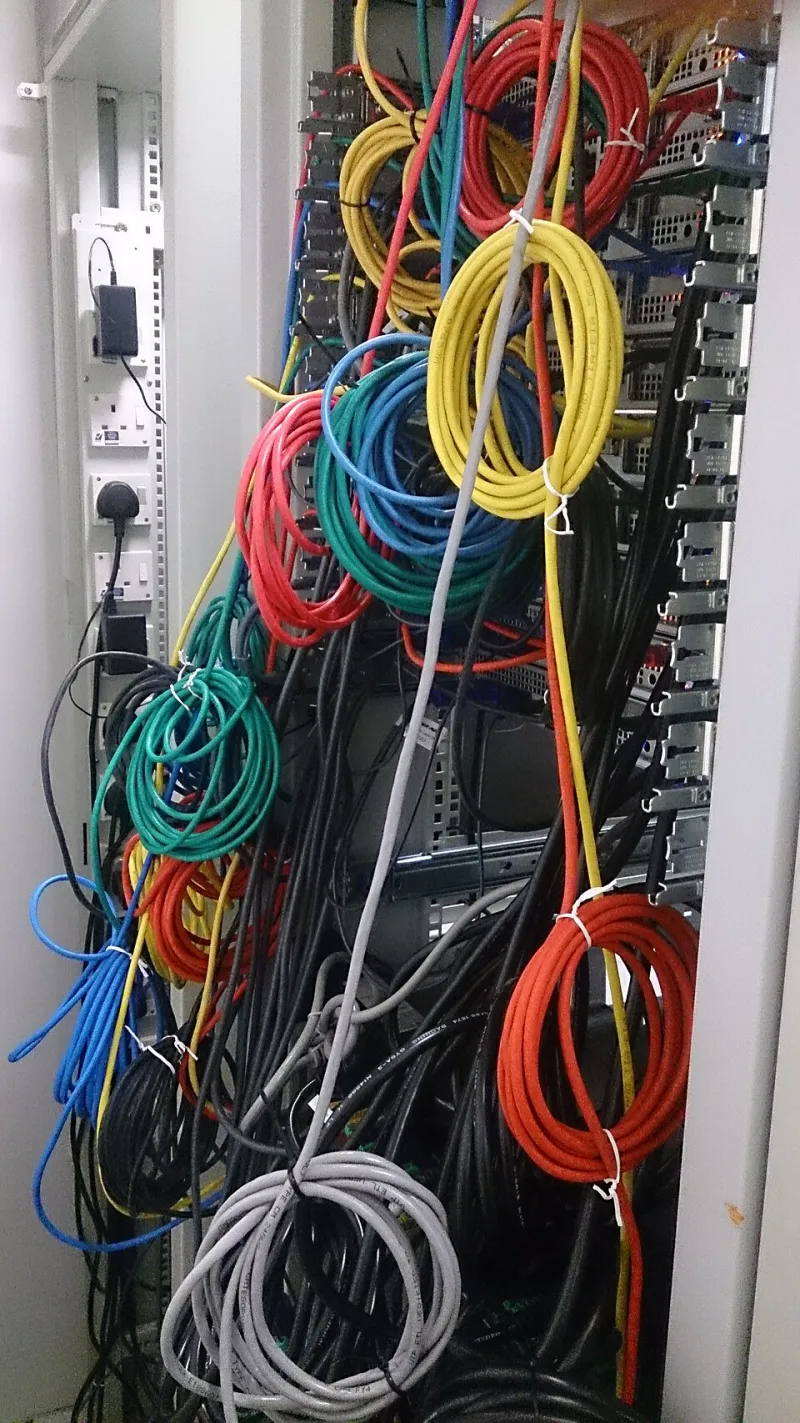
Change records are useful here. Temporary bridges have a habit of becoming permanent. A port enabled for an event, a firewall rule opened for a contractor, or a guest SSID bridged to a production VLAN for a demonstration may still be present years later. The audit should sample change tickets and compare them with current configuration. Where a temporary exception exists, it should have an expiry date and an owner. If it has neither, it is not temporary. It is architecture by accident.
Read the managed Wi-Fi contract as a network diagram
Managed Wi-Fi contracts often describe service levels, coverage and incident response, but they also define access paths. Remote monitoring, guest analytics, captive portal cloud integration, firmware update services and vendor support accounts can all create connections that touch production. The audit should request current network diagrams, subprocessor lists, support-access procedures and configuration baselines from the provider. It should ask how guest analytics data is segregated, whether vendor administrators use shared accounts, and what happens when a support engineer needs to troubleshoot an access point that is also used for production devices.
Contract review should confirm right-to-audit clauses, configuration change notification, evidence of patching and the provider's own segmentation obligations. A contract that permits remote access to the guest estate is not automatically a problem. A contract that permits it without logging, approval or scope limits is. The commercial document is part of the trust boundary because it authorises the people and systems that operate the boundary.
Test, record and close
The final step is a practical evidence table. For each guest-to-production path, record the source, destination, protocol, business owner, justification, control, expiry and residual risk. Rate each path by whether it is necessary, whether it is authenticated, whether it is monitored and whether it is time-bound. Then decide: remove the bridge, replace it with an application proxy, isolate the device with an egress allowlist, or retain it as an explicit exception in the zero-trust policy. The objective is not to eliminate guest access. It is to ensure that every route out of the guest network is known, owned and defensible.
A captive portal is a reasonable courtesy. It is not a security control. In 2026, UK organisations should treat guest Wi-Fi as a production-adjacent estate with its own bridges, credentials and suppliers. Audit those paths before they become exceptions nobody remembers approving, and before convenience quietly becomes the default route.