Provenance Before Packets: A UK Procurement Test for Firmware Trust
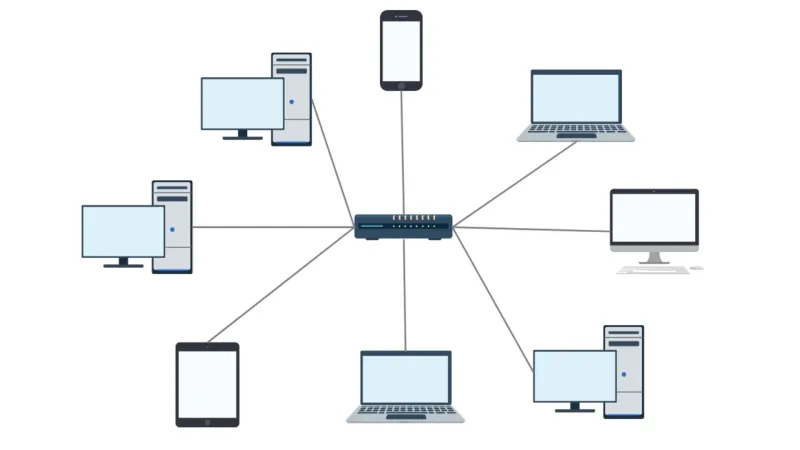
Photo: network switch firmware secure boot data centre close up, via www.boardinfinity.com
Zero-trust programmes in the UK have become fluent in identity. They can describe conditional access, device posture and least-privilege policy with precision. The weak point is often less articulate: the hardware that carries the packets. A switch, router, firewall or virtual appliance is frequently treated as infrastructure, trusted by default because it sits in a rack, a colocation cage or a cloud region. That is a category error. From a zero-trust standpoint, every one of those devices is an endpoint. Until its firmware can be proven, it is an endpoint with no verifiable identity and an undefined instruction set.
The boundary that login screens do not cover
Most zero-trust architectures draw a clean line around the user and the workload. They ask who is requesting access, from which device and under what conditions. They rarely ask what code is running on the switch that enforces the segmentation policy. That omission matters. A compromised firmware image can subvert VLANs, mirror traffic, bypass ACLs or survive an operating system reinstall. It can also present a healthy management interface while doing something else entirely. The result is a policy enforcement point that cannot be trusted to enforce policy.
Firmware is not a niche concern for server teams. UK network estates are full of appliances from multiple vendors, often bought through framework agreements, maintained by third parties and updated irregularly. Each device introduces a supply chain: silicon, board design, manufacturing, distribution, firmware signing, update tooling and support. Zero trust that stops at the server boundary is just a login screen with a rack in front of it.
Put provenance in the requirement
A procurement specification should treat firmware evidence as a mandatory architectural feature, not a vendor differentiator. The requirement needs to be precise enough to test. Ask for secure boot with a hardware root of trust, measured boot where the platform supports it, signed firmware images and an anti-rollback mechanism. Ask how the vendor protects signing keys, who can issue an update and how a compromised key is revoked. Ask for a software bill of materials covering firmware components, including third-party libraries and open-source elements.
Provenance should extend beyond the binary. Buyers should request a statement of manufacturing origin, a chain-of-custody record for the device and a clear account of which entities can authorise firmware. For higher-assurance environments, remote attestation is the useful control: the device should be able to produce evidence that its boot chain matches an approved state, and that evidence should be consumable by the organisation’s monitoring platform rather than buried in a vendor portal.
This is not about demanding bespoke hardware. It is about making standard security properties explicit. A supplier that cannot describe its signing hierarchy, update authority and vulnerability disclosure route is not ready for a zero-trust network, however impressive the data sheet.
Accept on evidence, not on delivery
Acceptance is where procurement language meets reality. Too many projects accept hardware on delivery, rack it, apply a baseline configuration and move on. A zero-trust acceptance test should be pass or fail. Before the device carries production traffic, verify the firmware version and hash against the approved release. Confirm the secure boot state and capture the boot measurements. Check that unsigned or incorrectly signed firmware is rejected. Test rollback protection and recovery procedures. Confirm that default credentials are absent or forced to change, and that the management plane is isolated from the data plane.
Run the test in a controlled lab or staging environment, then repeat the evidence capture on the production unit. Record the results in the asset register alongside the device identity. If remote attestation is available, prove that the monitoring platform receives and validates the evidence. If it is not, document the compensating controls and the residual risk. An acceptance pack that cannot be reproduced six months later is not assurance; it is a delivery note.
Maintain attestation after the handover
Firmware trust decays. Updates arrive, support contracts change, spare units are swapped and maintenance providers touch devices out of hours. A zero-trust network needs a lifecycle routine that treats firmware state as continuously relevant. Inventory should record model, firmware version, secure boot state, attestation status and end-of-support date. Monitoring should alert on drift: an unexpected firmware version, a disabled secure boot flag, a failed attestation check or a device that stops reporting.
Patch management needs a defined service level for network firmware, not just operating systems. The organisation should know who is allowed to approve an update, how the update is verified and how rollback is handled if a release fails. End-of-support dates belong in the risk register, because an unsupported switch is an unpatchable enforcement point. Spare parts and return-to-manufacturer processes should preserve evidence, not reset it.
Contract clauses that survive audit
UK buyers should translate these expectations into contract mechanics: evidence deliverables at acceptance, notification duties for firmware vulnerabilities, update and support commitments, audit rights and clear responsibility for attestation telemetry. Public sector frameworks and private sector agreements differ in wording, but the principle is the same. The contract should make evidence a condition of payment and continued support, not a favour granted during a quarterly review.
A practical checklist for UK buyers
- Require secure boot, signed firmware and anti-rollback in the technical specification.
- Request a firmware SBOM and a description of the signing hierarchy.
- Ask for remote attestation evidence and the format in which it is exposed.
- Make acceptance testing include tamper, rollback and default-credential checks.
- Record firmware provenance in the configuration management database.
- Define patch, disclosure and end-of-support obligations in the contract.
- Monitor attestation status continuously and investigate drift.
The logic is straightforward. Zero trust asks organisations to distrust by default and verify continuously. Network hardware deserves the same discipline as any user device. If a switch cannot prove what it is running, the network cannot prove what it is enforcing. Procurement is the first control point, acceptance is the proof point and lifecycle attestation is the maintenance regime. Treat every appliance as an untrusted endpoint until the evidence says otherwise.